You’re Gathering It
Somewhere along the way, most of us absorbed a quiet, corrosive belief: that age is something we spend. Each birthday, we tell ourselves, withdraws a little more from an account that’s slowly emptying. We speak of “running out of time,” of years “slipping away,” of being “over the hill.” The language itself is downhill, draining, diminishing.
But what if we have the entire metaphor backwards?
What if you’re not running out of time at all — but gathering it?
The myth of the shrinking life
The world sells youth relentlessly, and so we learn to grieve every year that passes as a small loss. We chase the version of ourselves we used to be, measuring the present against a past that always seems brighter in memory than it ever was in fact.
But look closely at the arithmetic of a life, and something strange emerges. The young have time but little else — little experience, little perspective, little understanding of who they are. They are rich in years and poor in wisdom. As we age, the balance quietly reverses. We trade raw, unspent time for something far more valuable: the knowledge of how to use it.
That’s not a loss. That’s a return on investment.
What you’ve actually been gathering
Think of everything you’ve accumulated that you didn’t have at twenty.
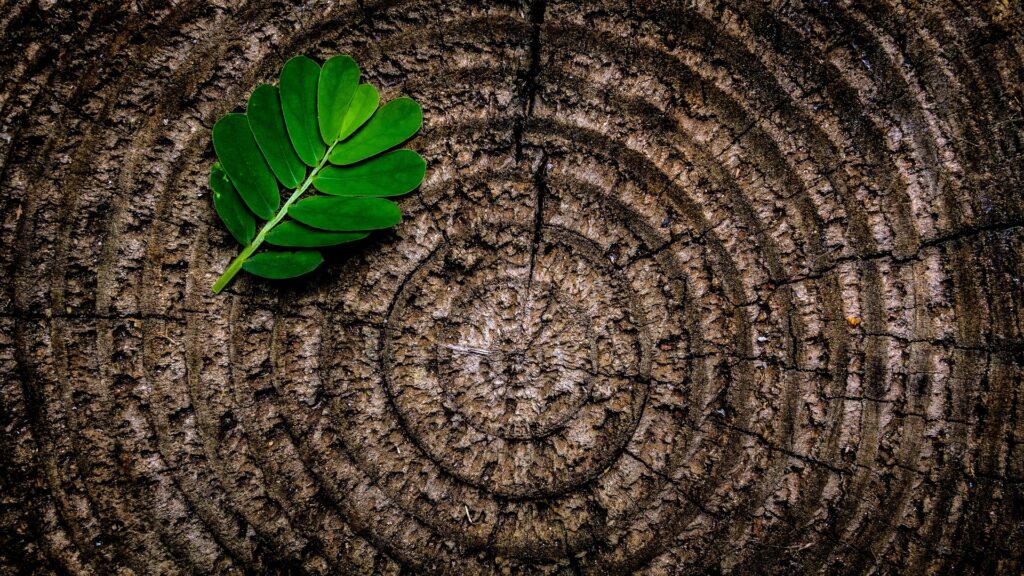
You’ve gathered discernment — the ability to tell what matters from what merely shouts. You’ve gathered resilience — the quiet confidence that comes from having survived things you once thought would break you. You’ve gathered relationships with roots, skills with depth, taste refined by years of paying attention.
You’ve gathered stories. You’ve gathered scars that became wisdom. You’ve gathered the rare and underrated ability to no longer care quite so much about what strangers think.
None of this was available to your younger self at any price. It can only be gathered, slowly, over time. And the longer you live, the more of it you hold.
What Korean Saju Says About Gathering Time
There’s an old idea in Korean Saju that fits this beautifully. Alongside the four pillars of your birth chart, Saju maps something called 대운 (daeun) — the great luck cycles that turn roughly every ten years across a lifetime.
What’s striking about daeun is its quiet optimism about age. In this tradition, life isn’t a single arc that peaks early and declines. It’s a sequence of seasons, each one opening a different kind of energy. A pillar that stayed dormant in your twenties can become the defining strength of your fifties. A door that wasn’t ready to open at thirty swings wide at sixty.
In other words, Korean Saju has never treated getting older as running down. It treats it as moving into new terrain — terrain you couldn’t have entered any earlier, because you hadn’t gathered enough yet. Each decade you carry forward everything the last ones deposited, and step into a season built for who you’ve become.
You don’t need to believe in luck cycles to feel the truth underneath them. The wisdom is simply this: the years aren’t subtracting from you. They’re rotating you toward rooms you’ve never been in — and handing you the keys as you go.
The Quiet Science of Getting Older
The idea that we only decline with age is, it turns out, mostly a story we tell — and one the research keeps complicating. A great deal of what makes a human being capable actually accumulates over time.
What grows as we age
Psychologists draw a line between two kinds of intelligence. One is the raw processing speed we prize in youth. The other — often called crystallized intelligence — is the vast, cross-referenced library of everything you’ve learned, felt, and lived. That second kind doesn’t fade with the years. It compounds. Vocabulary, pattern recognition, the ability to read a room, knowing which problems are worth solving — these tend to keep deepening well into later life.
The emotional dividend
There’s a well-documented shift researchers sometimes call the “positivity effect”: as people age, many report steadier moods, less reactivity, and a greater ease at letting small things go. Emotional regulation — the hard-won skill of not being hijacked by every passing feeling — is often one of the quiet gifts of a longer life. It’s not that older people feel less. It’s that they’ve gathered enough perspective to hold what they feel more lightly.
Why this matters
None of this erases the real losses that time can bring. But it does correct the ledger. If we only count what fades, we miss half the story — the half where judgment sharpens, empathy widens, and the self becomes more fully authored. Aging isn’t only subtraction. Measured honestly, a great deal of it is gain.
The shift that changes everything
This isn’t about pretending aging has no challenges. Bodies change. Losses accumulate. Time is genuinely finite, and that finitude is part of what gives life its weight and meaning.
But the story we tell about our years shapes how we live them. A person who believes their best days are behind them lives cautiously, nostalgically, with one eye always on the rearview mirror. A person who believes they are still gathering — still becoming — lives forward. They stay curious. They start new things. They understand that a life is not a candle burning down, but a fire being built, log by log, year by year.
The first story makes you smaller. The second makes you whole.
A gentler way to count your years
So here is an invitation. The next time a birthday approaches, or the years feel heavy, try changing one word. Instead of asking how much time do I have left?, ask: how much have I gathered — and what will I do with it?
You are not the diminished version of someone you used to be. You are the fullest version of yourself that has ever existed — carrying more understanding, more depth, and more quiet strength than any earlier edition of you ever could.
The years didn’t take that from you. The years gave it to you.
That is the heart of an ageless life: not the refusal to grow older, but the refusal to grow smaller. To keep gathering — wisdom, joy, purpose, connection — for as long as we’re lucky enough to be here.
You have not run out of anything. You are, in fact, richer than you have ever been.
A small practice
Before you go, here’s a small thing to try.
Think back to who you were at twenty — or ten years ago, if twenty feels far. Now name three things you carry today that you simply didn’t have then. Not achievements on a résumé, but inner things: a kind of patience, a boundary you can finally hold, a fear you’ve outgrown, a love you’ve learned how to give.
Those three things are your gathered time, made visible.
And I’d love to hear them. Scroll down and leave one — or all three — in the comments. What have you gathered that your younger self couldn’t have imagined? I read every one, and there’s something quietly powerful about seeing a whole community’s collected years laid side by side. Your log might be exactly the one that helps someone else keep building their fire.
— Sage